Destination-Based Pricing Models for SaaS Data Integration
Destination-based pricing shields teams from bill surprises tied to data volume and sync frequency.
A SaaS team signs an integration contract with a clear number in mind, then watches the invoice drift upward over several billing cycles without any corresponding change in headcount, feature scope, or customer count. The pricing unit a vendor chooses to meter determines who bears the cost of growth, and most teams find this out only after the bill has already moved. The problem sits in the meter itself, not in any single vendor's rates.
Why data integration billing has become a source of budget surprises for SaaS teams
Integration platforms price against different things: rows moved, events processed, connectors configured, compute credits burned. Each of these axes measures something genuinely different, so if you compare two vendors' sticker prices side by side, you learn very little about what either will actually cost once real data starts moving. A quote that looks cheapest at the proposal stage is often not the cheapest once a workload runs at scale, because repeated updates to the same records, high-frequency syncs, and fan-out to several destinations each put pressure on a different part of the pricing formula. A team can budget its platform license carefully at signing and still face a bill nobody modeled, because the billing unit itself compounds in ways that weren't accounted for going in, not because the vendor changed its rates. That gap between the contract price and the operating cost is where destination-based pricing enters the conversation, because it starts from a different question about what should be metered.
What destination-based pricing actually measures and how it differs from row- or event-based models
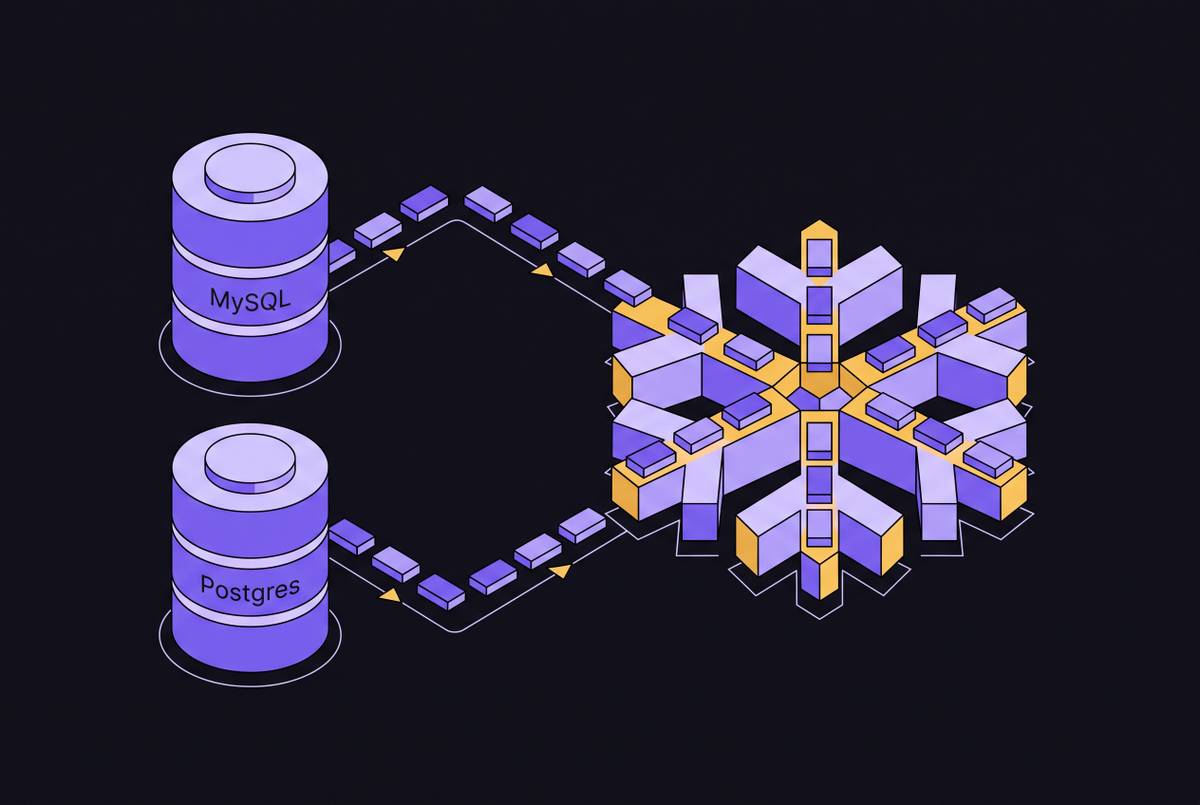
Destination-based pricing charges for where data lands, counting the number of warehouses, databases, or object-storage targets a team syncs to, rather than counting how many rows or events flow through the pipeline to get there. A destination is a deliberate choice: a team adds a new warehouse or brings on a new customer tenant as a product decision, not as a side effect of data volume swinging up or down in a given week.
Row-based and event-based pricing works differently: it charges for the data itself. Every insert, update, or re-sync adds to the counter, so a high-frequency source or a change-data-capture workload with frequent updates runs up costs with no new business value attached to any of it. Connector-based pricing takes yet another approach, charging per source: a team running many small, low-volume connectors pays as much per connector as a team running a handful of high-volume ones, regardless of how much data actually moves through either.
Destination-based pricing and row- or event-based pricing answer different questions about what the billing measures. Destination-based pricing answers "how many warehouses does this product serve?" Row- and event-based pricing answers "how much data moved?" The first scales with decisions a team makes on purpose. The second scales with operational conditions a team often doesn't control, like how often a source system updates its records.
The specific cost risks that row- and event-based billing creates at scale
Volume-sensitive billing charges more as a product succeeds, even when no new destinations get added and no new integration work happens. A source that updates frequently, think inventory counts, event logs, or user activity, will re-emit the same underlying records over and over. Under event-based billing, each of those updates counts as a billable event whether or not the downstream analytics actually changed.
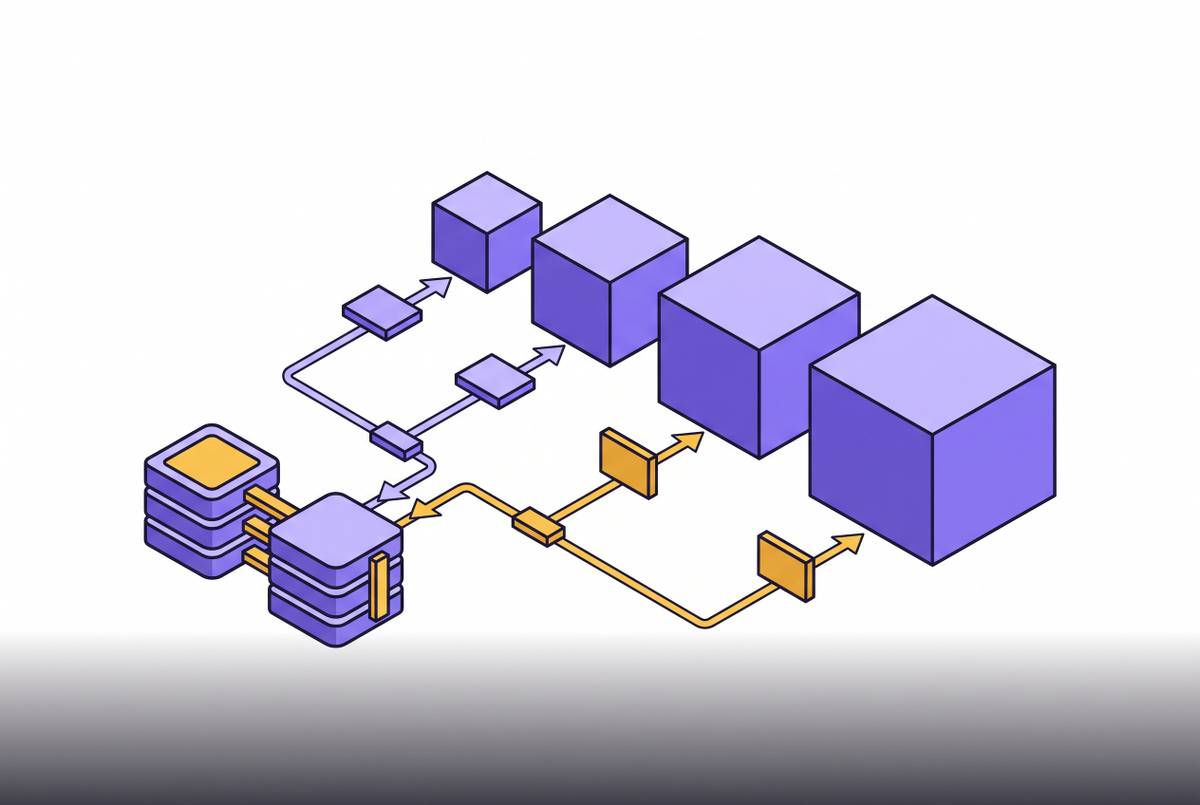
Fan-out makes this worse. A team syncing one source to several destinations, say, separate environments for different customers, multiplies its row count by the number of targets it serves. Under row-based billing, cost rises in direct proportion to that multiplication, with no ceiling tied to how many customers or environments actually benefit.
Cloud egress adds a second, less visible cost on top of this. Moving large volumes of data out of cloud infrastructure carries its own per-gigabyte transfer charges, separate from whatever the platform itself bills. Platforms that pass these transfer costs through to customers can add a significant amount to the total bill that the advertised price does not reflect. Getting an accurate cost picture means modeling three things together: the platform tier, the egress spend, and the update frequency and fan-out ratio that drive the row or event count. Few teams model all three before signing, which is part of why hybrid pricing structures, combining a base platform fee with some usage component, have become common: they're a response to how often pure consumption pricing has produced invoice shock in practice.
How Destination-Based Pricing Protects ISVs and SaaS Teams Building Multi-Tenant Data Connectivity
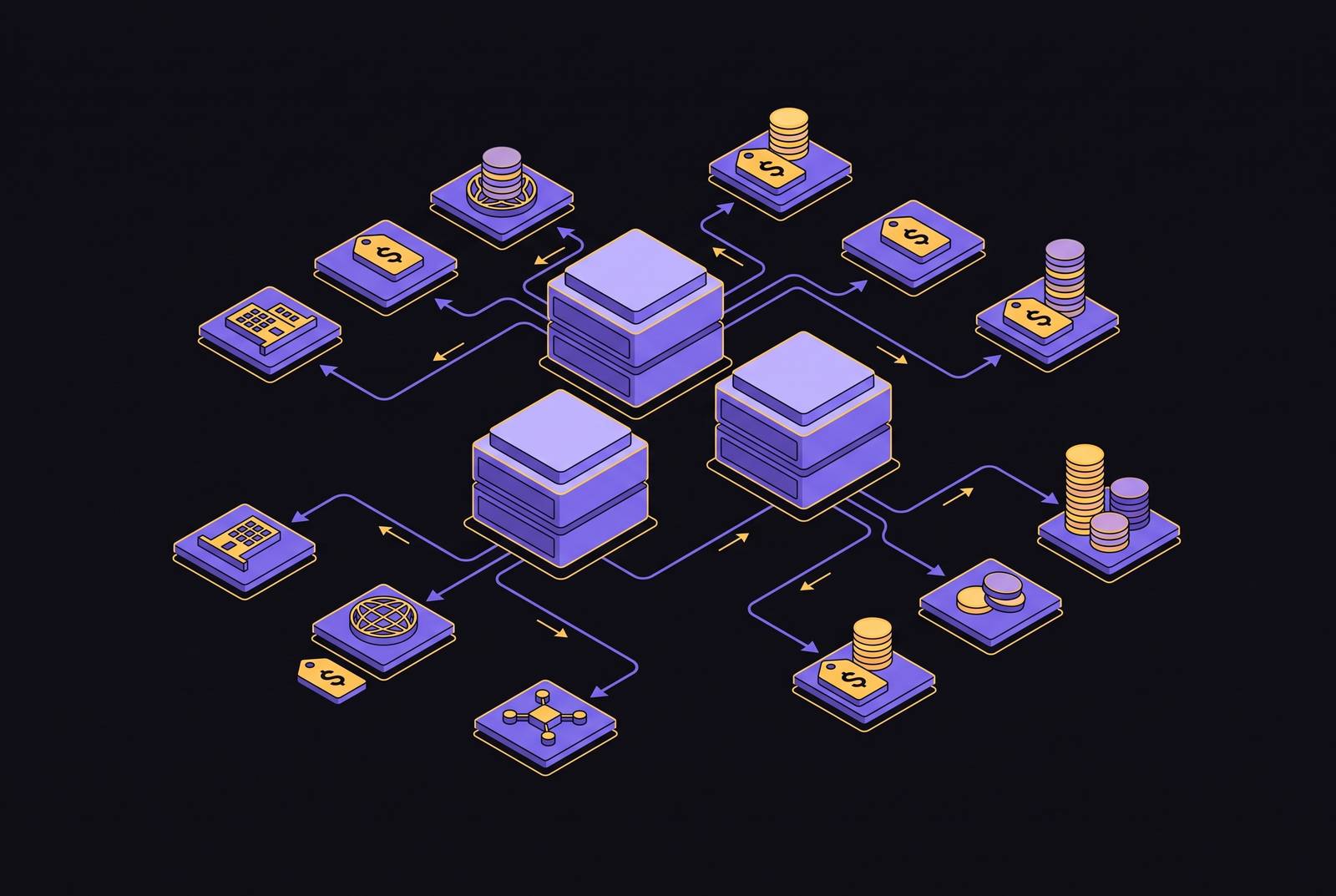
For a SaaS product that syncs each customer's data into that customer's own warehouse or database, destination-based pricing lines up cost with product growth instead of penalizing data volume the ISV doesn't control. Each customer tenant functions as a destination in this model, and adding a destination means onboarding a new customer, which is a revenue event. Cost and revenue move together.
Under row-based or event-based billing, a single large, highly active customer can spike the bill with no change in how many customers the ISV serves or how much value it delivers to everyone else on the platform. Destination-based pricing breaks that link: a customer who syncs more often, or holds a bigger dataset, doesn't move the billing tier. The cost an ISV pays tracks how many customers it has, not how those customers behave.
That predictability feeds directly into how an ISV prices its own product. If a team knows the integration cost per customer, rather than per row or per event, it can set its own tiers with confidence and protect margin as it scales. Platforms such as Prequel anchor pricing to destinations rather than data volume for this reason, so teams can predict costs from product decisions, like how many customer warehouses to serve, rather than from operational noise like how often records update or how many times data syncs in a week. For a product embedding warehouse connectivity into its own application, that turns each customer tenant into a billing unit instead of a cost multiplier, which is what makes scaling to hundreds of warehouses possible without watching sync frequency or egress volume drive a surprise invoice. When customer growth and cost stay aligned like this, a team can treat embedded integration as a real product feature, not something that quietly erodes margin as usage climbs.
Destination-Based Pricing: Transparency, Egress Treatment, and Destination Scope
Not every implementation of destination-based pricing delivers on the predictability the model promises. How a destination is defined, whether data-transfer costs are included, and whether the tier structure matches how teams actually grow together decide whether a given structure actually holds up.
Destination definition comes first. Does "destination" mean a single warehouse schema, a single database, a single storage bucket, or a single customer environment? A narrow definition can let the destination count climb faster than a buyer expects as a customer's deployment grows more complex. A broader definition, one destination per customer environment, lines up more closely with how ISVs actually structure multi-tenant deployments.
Egress and transfer fees deserve a direct question to the vendor. A model that still charges per gigabyte for data leaving the platform isn't a clean destination-based model, it's a hybrid one, and buyers should ask whether transfer costs are included in the destination fee, capped at some threshold, or passed through separately.
Tier structure matters just as much. If destination-count tiers jump in large steps and skip over a wide range of intermediate counts, a buyer has to either overpay early for capacity it doesn't need yet or scramble to renegotiate the moment it crosses a threshold. Finer, more even steps between tiers serve growing teams better.
Finally, check what isn't being metered. A genuinely clean destination-based model shouldn't also charge for rows, events, or API calls on the side. Any secondary meter sitting alongside the destination count brings volume-based risk right back into a pricing structure that was supposed to remove it.
When Destination-Based Pricing Fits Best
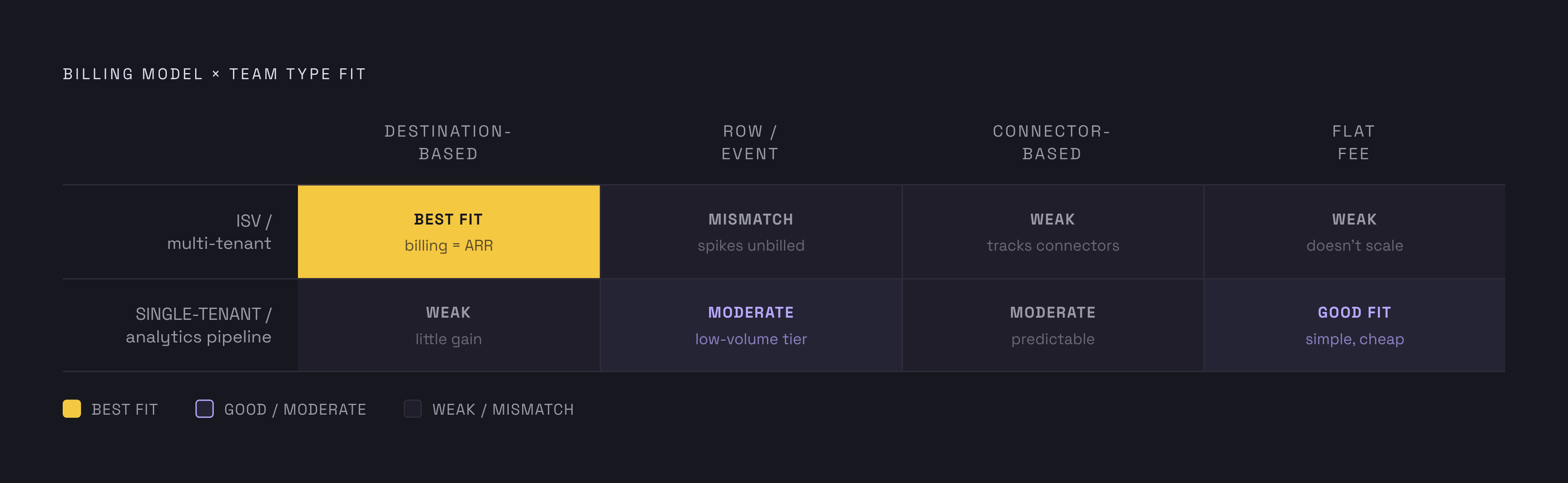
Destination-based pricing works best when the number of data targets is the natural unit of product value and grows in step with revenue. But it fits less well when the real variable driving cost is source volume.
ISVs and multi-tenant SaaS products are the strongest fit. When a product syncs to a new customer's warehouse for every customer it signs, destination count tracks ARR directly, and the pricing axis and the value axis become the same thing. Enterprise products with strict data-residency requirements fit well too: each regulated environment or region becomes its own destination, and destination-based pricing keeps cost predictable even when data volume per environment varies a great deal from one customer to the next.
The fit weakens for a single-tenant analytics pipeline with high row churn. If a team runs one internal warehouse and refreshes it constantly at relatively low row counts, it has little to gain from a model built around destination count; a flat fee or a simple low-volume row tier is probably simpler and cheaper. It weakens again for workloads dominated by source breadth. A team pulling data from dozens of small SaaS sources into a single warehouse is solving a source-count problem, not a destination-count problem, and a connector-based or flat-fee model may serve it better if the number of destinations stays low and stable.
The axis in the architecture that grows when the product succeeds is what a team should identify before choosing a model. If you price against that axis, the billing model stops being a source of surprise.
How Prequel and Other Platforms Implement Destination-Based Pricing
A pricing model is only as good as its implementation; the details of how a platform applies destination-based logic decide whether it protects a buyer at scale or quietly reintroduces the volume risk the model is supposed to eliminate.
Prequel is a white-label, embeddable data integration platform built for SaaS product teams syncing customer data into each customer's own warehouse, database, or object storage, the ISV multi-tenant pattern where destination-based pricing has its clearest advantage. Its pricing is destination-based with no data-transfer fees, so cost doesn't move based on how many rows pass through per destination, and that addresses both the egress risk and the volume-spike risk described earlier. The platform supports high row volumes per destination at frequent sync intervals across more than 20 destination platforms, including Snowflake, BigQuery, Redshift, Databricks, S3, and standard relational databases. It carries SOC 2 Type 2 certification, uses end-to-end encryption, and offers private-cloud deployment alongside self-hosted and shared-cloud options, so you get security handled as part of the architecture, not sold as a separate tier. An ISV embedding Prequel can answer the question "what does my integration cost when I add my 50th customer?" with a predictable, destination-count-based number rather than an estimate tied to how those 50 customers happen to use their data.
Estuary Flow suits teams that need streaming latency and log-based change-data-capture first, not embedded, white-label multi-tenant connectivity. Its billing includes a per-connector-instance charge covering both sources and destinations, which makes it a different structure from a purely destination-count model, so buyers evaluating it for this kind of workload should check current vendor documentation for the specifics of how that charge applies at their scale.
Integrate.io offers a fixed-fee pricing structure built around a managed data integration layer with broad connector coverage. Its pricing approach differs from destination-based billing, so if you're considering it, check current vendor documentation directly for plan details and how the fixed fee scales with usage.
Modeling total cost of ownership before committing to an integration pricing model
A pricing model that looks like the better deal at today's volume can turn into the more expensive option once projected out 24 months, and the only way to find out ahead of time is to model the actual billing unit against realistic workload assumptions rather than the vendor's example numbers.
Start by identifying the primary meter, whether that's destination count, rows, events, or connectors, and project it at current scale, at 12 months, and at 24 months, using realistic growth assumptions. Add egress and transfer costs as an explicit line item: ask the vendor directly whether data transfer is included in the price, capped at some level, or billed separately, and build the realistic transfer volume into the projection. Finally, model the fan-out ratio. If the product syncs a single source to multiple customer destinations, multiply the primary meter by the number of tenants it serves, since this is exactly where row-based and event-based models diverge sharply from destination-based ones as a product scales. A model built this way, against the actual meter rather than the headline price, is what tells a team whether its integration costs will track its growth or quietly outpace it.