Materialized Views in Snowflake vs dbt Incremental Models
Refresh logic belongs in the warehouse or the orchestrator, and that choice drives every tradeoff.
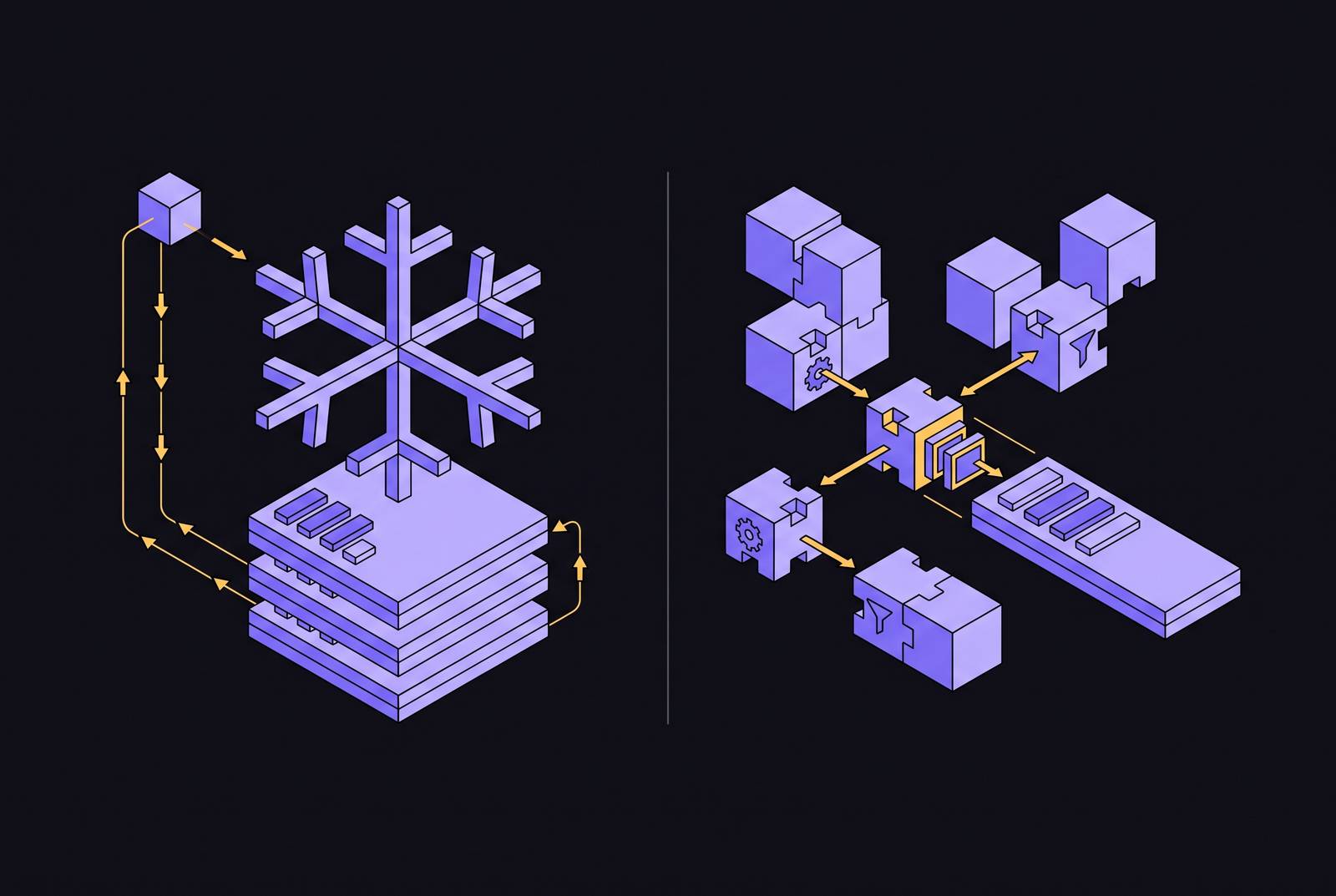
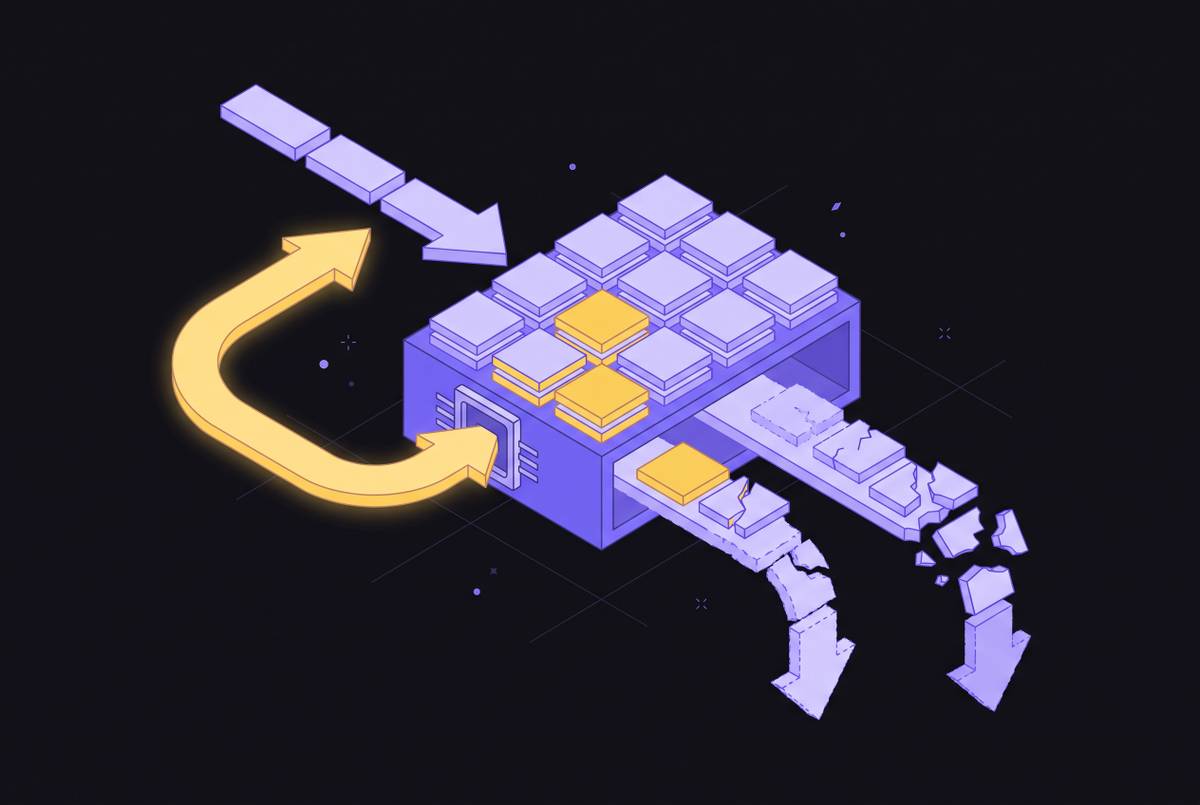
Most engineers approach Snowflake refresh strategy as a binary choice between a materialized view and a dbt incremental model. That framing assumes two stable, well-defined options with clear tradeoffs. The actual decision is not object A versus object B. It is a question of where refresh logic should live: automated inside the warehouse, or orchestrated from outside it. That placement drives every other tradeoff worth understanding.
What each Snowflake object actually does and what it cannot do
Snowflake's three materialized objects serve genuinely different use cases, and their constraints are platform-level facts rather than configuration choices an engineer can override. Native Materialized Views sit at the most restricted end of the spectrum. They are limited to a single source table, with no joins, no window functions, no subqueries, and no non-deterministic functions in the definition. The tradeoff for those restrictions is meaningful: automatic query rewrite. When a query against the base table matches the view's definition, Snowflake's optimizer redirects the query to use the materialized view without the user referencing it explicitly. A background maintenance process handles updates from DML operations on the base table continuously. In practice, native materialized views fit simple aggregations on one high-volume table where transparent query acceleration matters more than transformation flexibility.
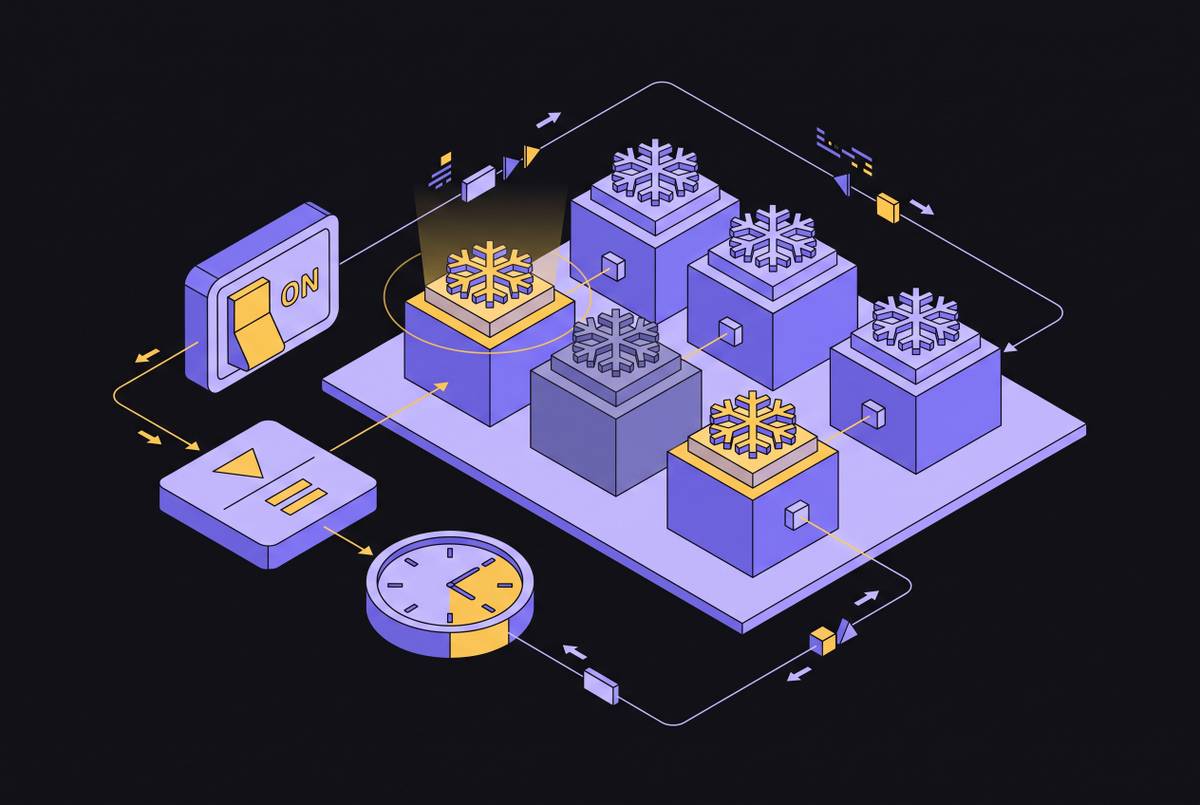
Dynamic Tables sit at the opposite end on flexibility. They support joins, unions, windowed aggregations, and multi-level data pipelines, which is precisely the capability native materialized views lack. Refresh is controlled by a TARGET_LAG parameter, with a minimum lag of one minute as a hard platform floor. The default refresh mode is AUTO, which evaluates the query at creation time and resolves to INCREMENTAL or FULL depending on whether the query supports change data capture. Incremental refresh finds only the rows changed since the last refresh, so it is much cheaper than recomputing the full result. This is the object that dbt-snowflake maps to when a model is configured with the dynamic_table config. Notably, dbt-snowflake does not support Snowflake's native materialized views at all. The materialized_view config is unsupported on Snowflake, and dbt's own announcement is explicit that Dynamic Tables are the better fit because they support the joins and aggregations that native materialized views heavily restrict.
Semantic View Materializations are a newer layer, in preview as of July 2026, that materializes pre-aggregated dimension and metric slices of a Snowflake Semantic View. The critical constraint is narrow but consequential: the materialization only benefits queries issued as Semantic SQL, through the SEMANTIC_VIEW construct or standard SQL against the semantic view itself. There is also a cost trap. The suspended state and its reason are visible to administrators via SHOW MATERIALIZATIONS and refresh history, but nothing in the query path signals to consumers that the pre-aggregation has stopped.
How dbt incremental models work and what they require from the engineer
dbt incremental models shift refresh logic entirely into the orchestration layer. The engineer owns the filter that decides which rows changed, the schedule that decides when refresh runs, and the responsibility for making sure neither introduces errors. On first run, dbt builds the full table. On subsequent runs, it applies an incremental filter that the engineer writes and owns, controlling which records get inserted or updated since the last run. For Snowflake, the available strategies are append and delete+insert.
The correctness burden is real and entirely the engineer's. Poor incremental logic can silently introduce duplicates, gaps, and metric drift, and the warehouse does not catch these failures because it has no visibility into the intent of the filter. Late-arriving data is the structural weak spot. The lookback window in the incremental filter is fundamentally a guess: a window too small misses late records silently, while a window too large scans more data on every run and raises cost. The control advantage is the compensating factor. Because the engineer owns the SQL and the schedule, non-deterministic functions, complex business logic, and timing tied to downstream SLAs are all possible. None of those are available in Snowflake's native objects. dbt's own documentation recommends starting with simpler materializations and moving to incremental only when performance problems emerge, which suggests the default posture should be restraint rather than premature optimization.
Where automation reduces cost and where it obscures it
Warehouse-native refresh hides cost decisions inside the platform, but orchestration-layer refresh makes them explicit. Neither is cheaper by default. With dbt incremental models, the cost lever the engineer controls is the lookback window and run frequency. The engineer can see the tradeoff directly because it sits in code under version control. The engineer chooses where on that curve to sit, and the choice is explicit but not always visible to downstream stakeholders who read the lag as a latency promise rather than a cost commitment.
Native Materialized Views occupy the most opaque position. The background maintenance process runs continuously, and the engineer does not set a cadence. Cost control is indirect at best: the platform decides when refreshes happen based on DML activity, and the engineer has limited ability to tune that behavior. A materialization that falls behind its MAX_STALENESS threshold stops benefiting queries without any visible failure. Engineers may believe they are serving pre-aggregated results when they are actually running full compute against raw tables. Query result caching offers a partial substitute for some of this: stable query patterns against materialized data can benefit from Snowflake's result cache and reduce compute further, but only if the integration or BI layer's query patterns are consistent enough to hit it. dbt's own announcement frames the underlying tradeoff directly: using a materialized view, meaning a Dynamic Table, means handing the incremental update logic to the platform. The cost is less fine-grained control over orchestration.
When product teams embed warehouse connectivity into their applications, they face the same architectural question: whether refresh logic should live inside the warehouse or be orchestrated from the application layer. Prequel handles outbound syncs by letting product teams control refresh cadence and cost explicitly from their integrations layer, rather than delegating those decisions to warehouse automation. That mirrors the tradeoff dbt teams face when choosing incremental orchestration over warehouse-native refresh.
The freshness SLA each approach can and cannot deliver
Each approach's freshness guarantee is bounded by architecture, and no configuration can overcome that. Native Materialized Views offer continuous, automatic freshness for simple single-table patterns, but the SQL constraint ceiling means any transformation complex enough to require a join immediately disqualifies this option. Dynamic Tables make an explicit freshness contract through TARGET_LAG: data is no more than that duration behind the source. The minimum is one minute, which is a hard floor for any use case requiring sub-minute latency. dbt incremental models are bounded by the orchestration schedule. If a dbt run fires every 15 minutes, freshness is at best 15 minutes. If a run fails, freshness degrades silently until the next successful run, and there is no warehouse-side mechanism to alert downstream consumers.
Semantic View Materializations present the most insidious freshness failure. For SLAs measured in hours or tied to business events such as end-of-day processing, dbt incremental models with a reliable orchestrator are a natural fit. The hybrid pattern emerges here as the article's practical recommendation: Dynamic Tables, or dbt's dynamic_table materialization, for staging and intermediate transformation layers where high-volume, mutation-heavy join work benefits from native CDC handling, and dbt incremental models for the final presentation layer where custom logic, non-deterministic functions, or downstream SLA timing is required.
Understanding each object's hard constraints, which transformations it can express, what refresh guarantees it offers, and what costs accrue, matters because these are not tuning choices but platform-level boundaries. The same principle applies to data integration. When product teams offer customers the ability to export data to any warehouse, the refresh strategy, whether incremental syncs or full refreshes, tightly controlled cadence or autonomous warehouse refresh, becomes a feature constraint that shapes both the customer experience and the cost structure, just as it does for materialized objects.
Why materialization placement becomes a product decision in embedded SaaS architectures
When Snowflake is a customer's data destination rather than an internal analytics store, materialization strategy determines the read-path cost and freshness that end customers receive. The shift in B2B SaaS is structural: the warehouse has become the source of truth for customer-facing data products, and the materialization layer now sits in the critical path between raw customer data and the features those customers rely on. The scalable read-path pattern is to materialize relevant Snowflake-resident data into an integration-friendly read schema, refresh on a cadence appropriate to the freshness budget, and serve downstream queries from the materialized data, avoiding repeated heavy queries against raw tables.
Multi-tenant isolation raises the stakes considerably. Row-level, column-level, and field-level security defined in the semantic or transformation model must be inherited by every query, including AI-generated ones. The materialization layer's governance chain must be auditable regardless of whether refresh logic lives in dbt or in the warehouse. Prequel's white-label data integration platform is designed for this pattern: it supports sync to 20+ destination types including Snowflake, with destination-based pricing that does not penalize teams for moving more data.
How AI agent workloads change the stakes of every materialization decision
AI agents are not a new consumer type that fits neatly into existing materialization patterns. They change the cost and correctness calculus for every approach discussed above. Pre-aggregation via materialization becomes directly load-bearing for AI cost control, not just a performance optimization.
The semantic layer gains a new role as agent interface. dbt's MCP server can give AI tools governed access to dbt-managed assets including the dbt Semantic Layer, so agents can discover metrics, models, lineage, and documentation before generating queries. Snowflake's internal practice, documented in August 2026, is that agents using semantic views to go directly to SQL execution bypass time spent finding and sampling multiple data sources. Agents are more token-efficient when table relationships and join data are expressed in semantic views rather than inferred at query time.
Semantic View Materializations can deliver dramatic compute reduction when active. Snowflake's own benchmark showed scanning dramatically less data for TPC-DS queries, with query speedups between 59× and 91×. For AI workloads running many queries per session, this compounds. If an AI agent gets a slow query, it retries, compounds token usage, and may return a result the user cannot distinguish from a fast one. For SaaS teams building AI-powered features on top of customer data in Snowflake, Prequel's architecture allows AI agents to access synced data from the materialized read schema, giving the agent a stable, governed read surface without querying raw customer data directly.
A practical framework for choosing where refresh logic should live
The right placement for refresh logic is determined by SQL complexity, freshness SLA, correctness requirements, and who owns the failure, not by which option is technically newest or most automated. Use native Materialized Views when the transformation fits in a single source table with no joins, when transparent query rewrite is the primary goal, and when the team wants zero orchestration overhead and can accept the SQL constraint ceiling. Use Dynamic Tables, or dbt's dynamic_table materialization, when the transformation requires joins, unions, or windowed aggregations, when a sub-hourly but not sub-minute freshness SLA must be contractually expressed via TARGET_LAG, when high-volume mutation-heavy staging and intermediate layers benefit from native CDC handling, and when the team wants warehouse-managed refresh without writing orchestration code. Avoid Semantic View Materializations in production for AI or embedded use cases until the silent suspension behavior is acceptable, or until the team has monitoring in place to detect when the materialization has been suspended and queries are reverting to full compute.
The hybrid pattern should be the default for complex pipelines: warehouse-native refresh through Dynamic Tables for high-volume intermediate work, dbt incremental models for the governed presentation layer, and an integration platform handling sync to customer destinations on top of the materialized read schema rather than raw tables. For embedded data products, the materialization decision is inseparable from the integration architecture. The team that owns the Snowflake schema should also own the freshness cadence exposed to the integration layer, whether that layer is Prequel or another connector.