Scoring Customer Data Export Tools on Snowflake Multi-Tenancy and Self-Serve Readiness
Evaluate export tools on both tenant isolation and customer self-service capability.
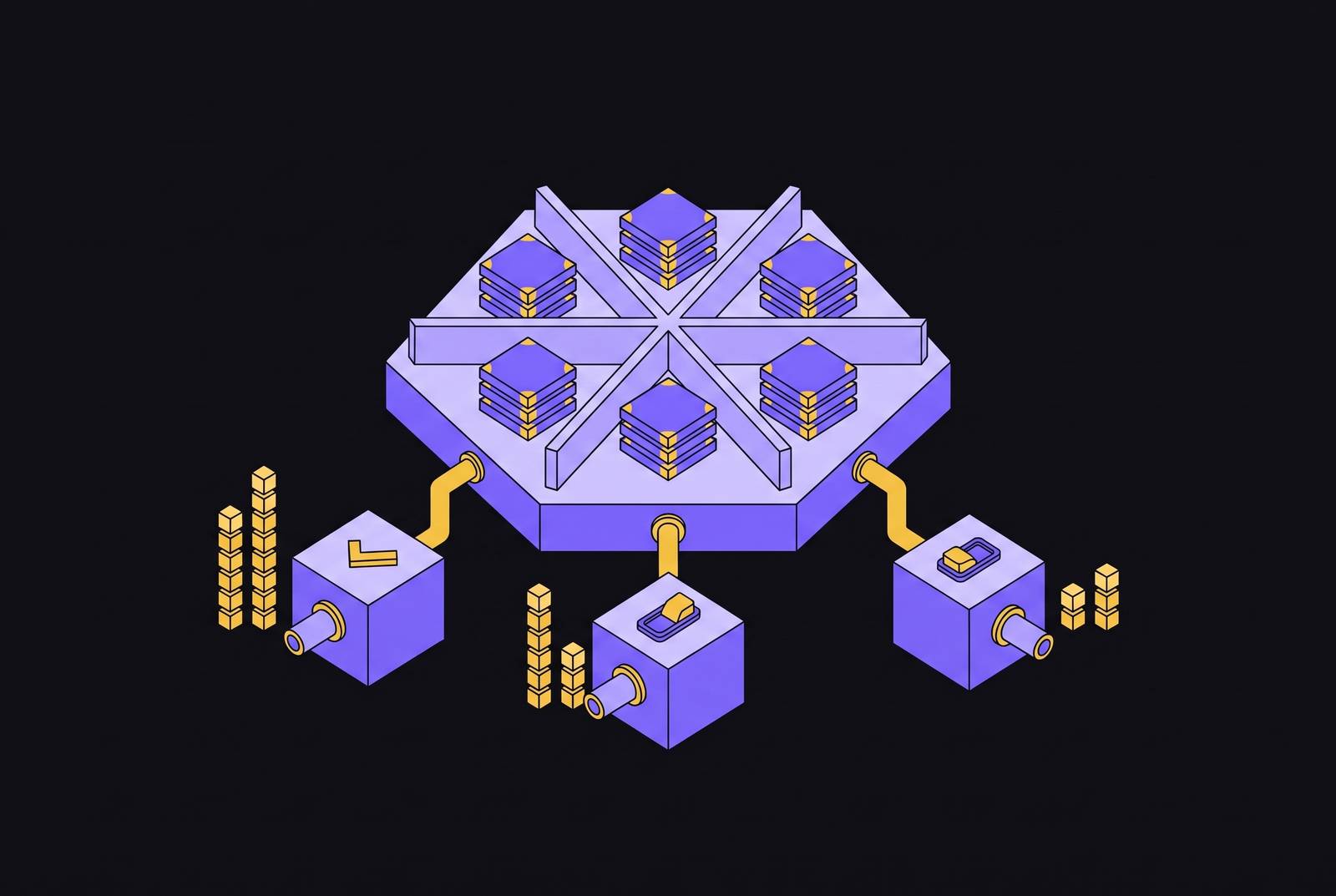
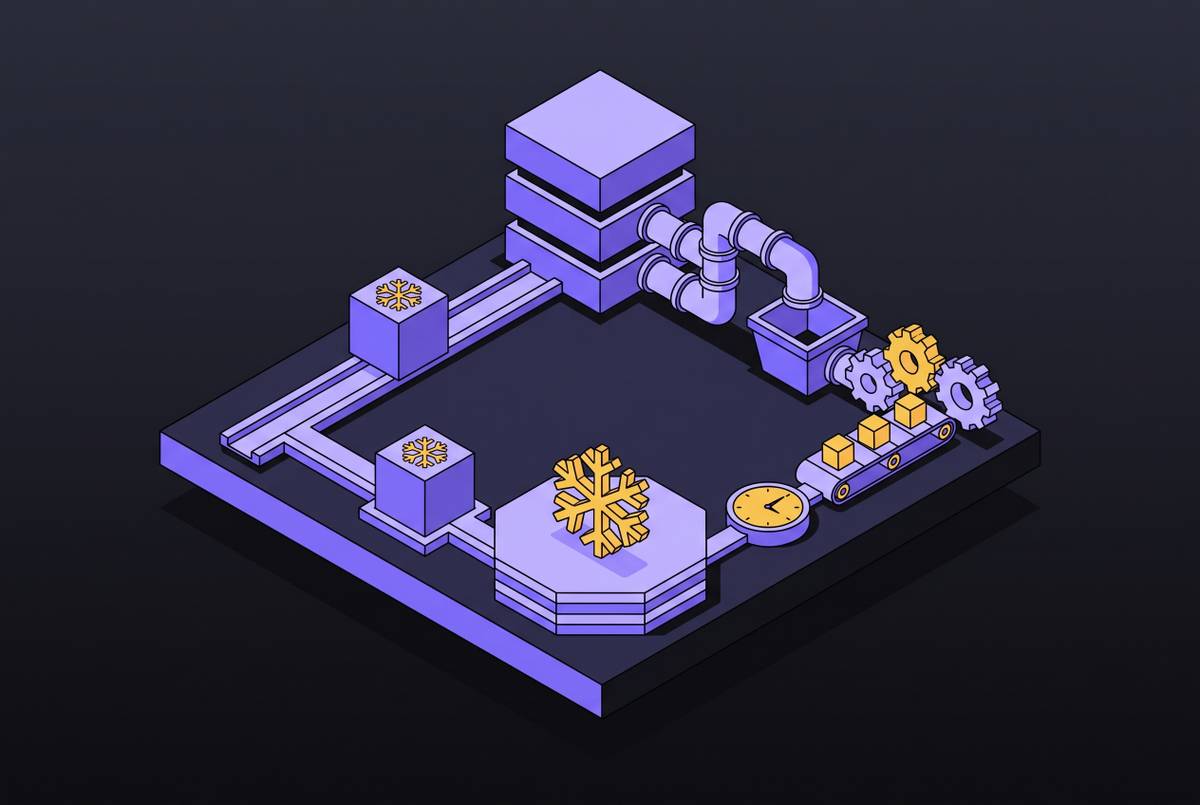
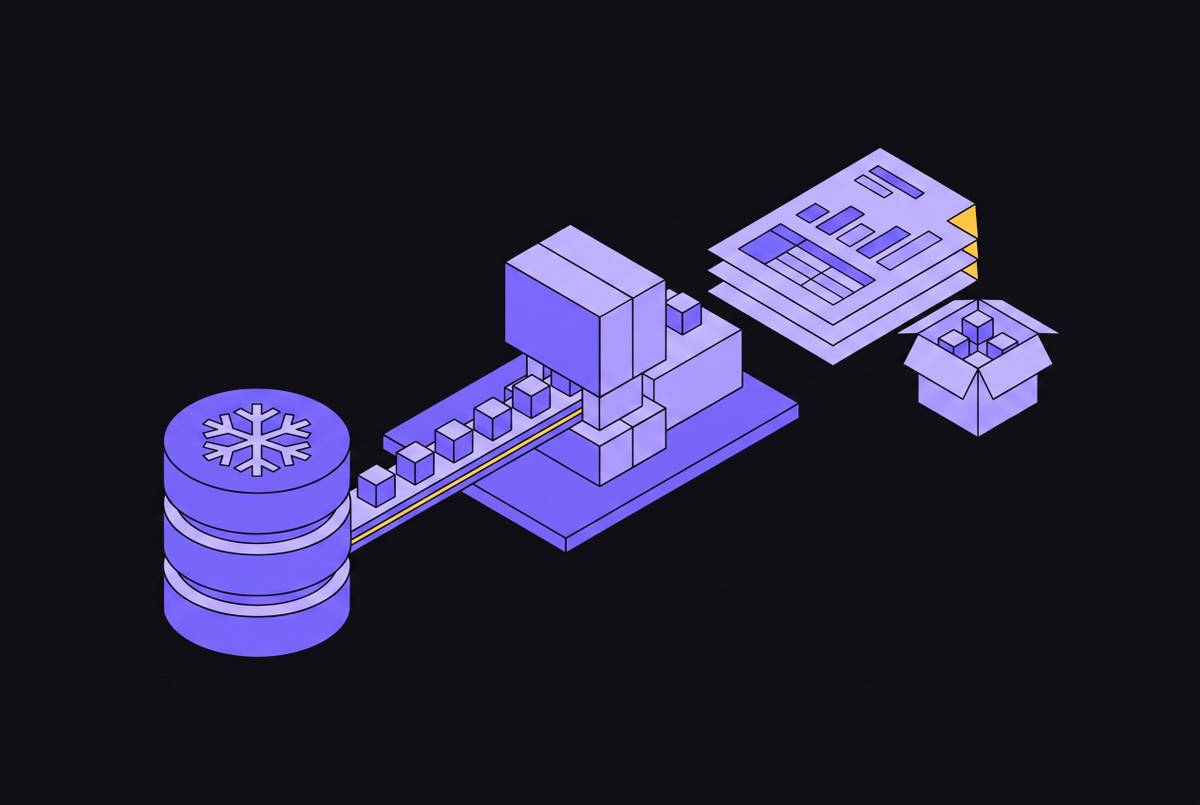
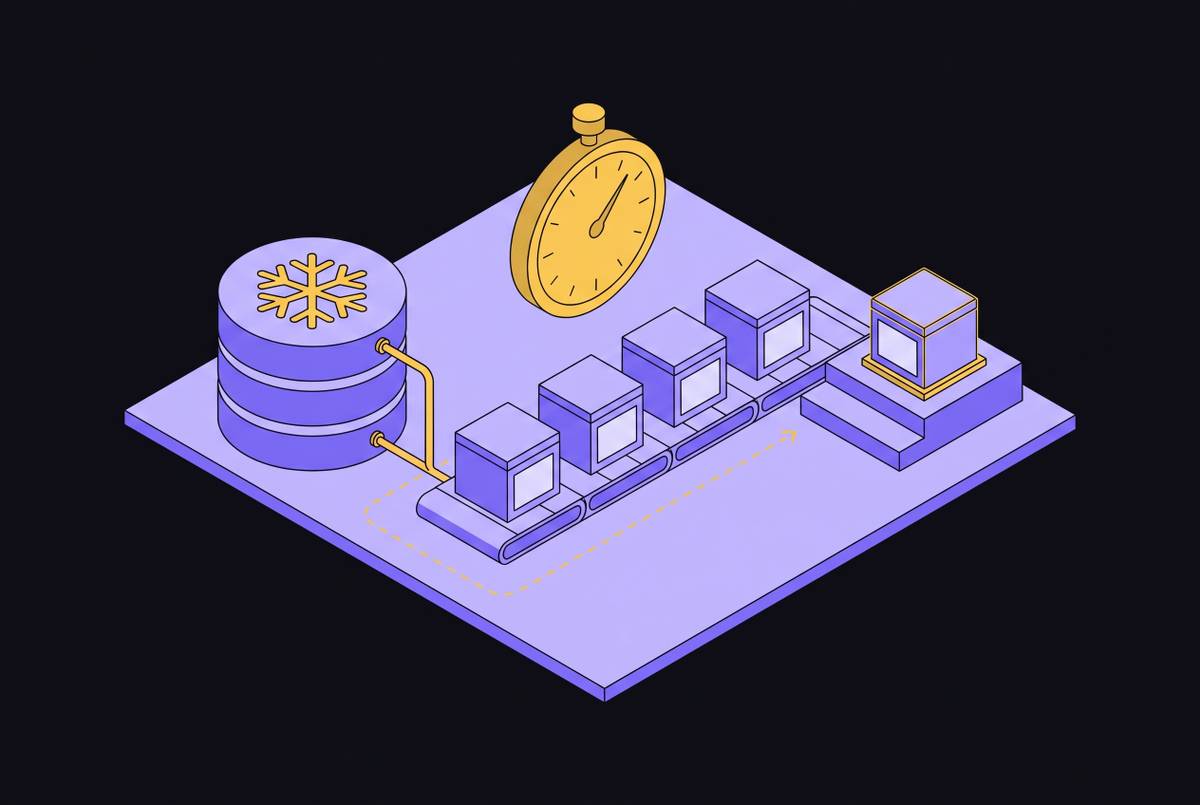
Customer data export tools for Snowflake-connected products should be scored on two linked dimensions: tenant isolation and how much customers can do to manage exports without engineering help. A white-label embedded integration platform is an option when it supports both the chosen isolation model and the full export lifecycle. The deciding test is whether customers can configure, authenticate, schedule, monitor, and repair exports without weakening the data boundary.
Why Snowflake multi-tenancy and self-serve export are two dimensions of the same decision
Consider a team that selects a polished self-serve portal, then discovers during implementation that it assumes one schema per tenant. The product uses shared tables with Row Access Policies, so adopting the portal requires reworking either its configuration flow or the isolation model. The interface looked suitable in isolation. Its underlying assumptions were not compatible with the product’s data boundary, turning a tool choice into an architectural change.
The reverse is just as consequential. A tool may handle shared-table isolation correctly but still need an engineer to provision every customer destination. That protects data but leaves the customer dependent on the SaaS vendor’s team. The isolation model determines what configuration the export layer needs, while the self-serve design determines how much of that configuration customers can safely control. The scorecard must test both dimensions and how they work together, since a high score on either one alone is not enough.
How Snowflake multi-tenancy isolation models differ in what they expose to export tooling
Shared-table isolation, schema-per-tenant isolation, and database-per-tenant isolation each put the tenant boundary in a different place. With shared tables, customers’ data is in the same tables, and Row Access Policies control which rows can be accessed. The export boundary sits in the query layer. Export configuration must therefore keep those policies in place even when customers choose what to export, because separate destination credentials do not replace source-side isolation.
Schema-per-tenant isolation gives each customer a distinct schema, making schema selection part of export configuration. DDL migrations across hundreds of schemas can become slow and brittle, while connection pooling can break down above a few hundred tenants. An export process that opens a new connection per schema per sync compounds that burden.
Database-per-tenant isolation moves the boundary to a separate database for each customer. In the export model described here, each new customer requires a new Snowflake connection. Provisioning becomes part of the customer onboarding path. Whether that step can be delegated safely will shape the self-serve experience, but the architectural requirement exists before any interface is chosen. The export layer must account for the connection boundary rather than treating every tenant as another filter on a shared source.
Logical isolation does not, by itself, separate compute. Customers whose rows are correctly isolated can still contend for a shared compute pool. A large export scan for one customer can therefore degrade another customer’s workload without exposing any unauthorized data. These are distinct failure modes. The architecture must account for both the data a query can access and the resources it consumes, rather than assuming that a clean row boundary also prevents noisy-neighbor effects.
Why the push toward per-customer isolation is changing what "good" looks like on a vendor scorecard
Enterprise compliance and procurement requirements can make an otherwise acceptable export tool ineligible. Regulated customers may need VPC deployment, private-cloud operation, or customer-managed installation in place of a shared-cloud service. Interface quality cannot compensate for that deployment mismatch. As per-customer isolation requirements become stricter, the scorecard needs to distinguish experience improvements from requirements a tool must meet for a deal to proceed.
The first isolation criterion is native model compatibility. A tool should support the product’s database-per-tenant, schema-per-tenant, or shared-table architecture without workarounds that weaken the policy layer. A tool whose raw SQL execution bypasses Row Access Policies scores zero on this criterion, regardless of its other features. The presence of SQL generation alone is not the failure, but bypassing the policies is.
Compute isolation under load needs its own score because customers can compete for resources even when access control works correctly. The evaluation should check whether the tool supports per-tenant warehouse assignment or query-level workload controls. Deployment range is another independent criterion. Shared-cloud, VPC-isolated, private-cloud, and customer-managed options should be assessed against the required deployment environment, including whether isolation guarantees survive the move. An available deployment option is insufficient if adopting it weakens the controls that made the tool eligible.
The audit surface completes the isolation assessment. Per-tenant, timestamped export logs show what each customer does, while platform-level logs alone fail this criterion for enterprise buyers. For SOC 2 Type II evaluation, the evidence must show controls operating throughout the audit window. Cloud configuration snapshots or SIEM log exports with timestamps are relevant forms of that evidence. A broad compliance claim does not answer whether a particular tenant’s export activity can be examined.
How can customers configure their own exports without engineering help?
Self-serve readiness measures whether an end-customer can handle the full export lifecycle without help from the SaaS vendor’s engineering team. A configuration screen is only one component. The score must cover configuration, authentication, scheduling, monitoring, and repair, because a customer who can start an export but cannot resolve its failure remains dependent on support. Each stage should be checked for work the vendor has to do that the interface may hide.
The configuration surface should fit inside the SaaS product through a white-labeled React SDK, Web Component, or equivalent embedded component. That keeps export setup within the customer’s product context. An iframe-heavy or redirect-based flow scores lower when it breaks that context and exposes the integration vendor’s brand. Authentication delegation then tests a different boundary. Customers should be able to authenticate their Snowflake connections through supported OAuth, key-pair, or role-based flows without an engineer provisioning credentials for each destination.
Customers should be able to add, modify, or remove Snowflake accounts, schemas, and databases through the embedded interface without waiting for a vendor deployment. Changes should also be atomic and reversible from the customer’s side.
Monitoring must expose sync status, row counts, error messages, and retry state to the customer. Otherwise, the customer still needs support to learn why an export failed. Customer-visible observability is a prerequisite for genuine self-service. Scheduling and throughput control complete this dimension by allowing customers to choose sync cadence and manage volumes within their entitlement. Hard-coded schedules or limits that only engineers can change lower the score even if configuration and authentication are fully embedded.
How the two dimensions interact: where isolation choices constrain self-serve design
The scores should remain separate before their compatibility is tested. A high result on one dimension cannot cancel a structural failure on the other. Consider a team that picks database-per-tenant isolation and an embedded configuration tool, then discovers that every new connection requires a vendor engineer. Its interface may score well, but authentication delegation scores zero.
A different coupling appears with shared tables. Consider a team that picks a flexible export builder, then discovers that customer-selected SQL or tables can expose a route around Row Access Policies. The team must constrain what the interface exposes to preserve isolation, reducing configuration flexibility. Evaluators should ask whether the tool can preserve the policy boundary within the intended customer controls, rather than accepting unrestricted configuration as an automatic advantage.
To test the isolation boundary, the proof of concept should provision a second tenant while the first tenant’s export is running. The evaluation should verify that the second tenant’s data never appears in the first tenant’s destination and establish whether the audit log is tenant-scoped or platform-scoped. The result should be checked against the chosen isolation model, including whether its provisioning requirements limit what customers can do on their own. If they do, the team must change the model or explicitly accept that limit.
The self-serve test should then use a non-technical user from a test customer account. That user should complete the configure-authenticate-schedule-monitor flow without assistance from the SaaS vendor’s team. Timing the flow and counting steps that require vendor involvement exposes hidden dependencies. The full lifecycle test should also check whether customers can use the controls to change destinations and repair failures. A successful first sync does not establish that ongoing operation is self-serve.
Security evidence should back up both tests. The checks should include SOC 2 Type II certification with continuous-monitoring evidence, encryption in transit and at rest, and per-tenant key options for regulated buyers. Deployment availability must match procurement requirements. VPC or private-cloud operation may be mandatory, while the most regulated end-customers may require customer-managed deployment. These options need to preserve the same tenant boundaries exercised in the proof of concept.
Charging by transferred data volume makes additional exports more expensive and can discourage customers from using the self-serve capability. Destination-based pricing removes that particular disincentive and aligns cost with destination growth instead. Evaluators should therefore consider the expected pattern of export frequency and size alongside the initial price. Commercial terms can undermine autonomy even when the technical workflow supports it.
A white-label embedded integration platform is a first-class option for teams that do not want to build both layers themselves. A suitable platform provides an embedded interface, manages per-destination credentials and OAuth refresh, and exposes the export lifecycle through an API the SaaS product controls. It also handles the number of rows needed per destination per sync on each of the platforms in use. Destination-level isolation and a product-controlled interface address the two dimensions together, but source-side policy compatibility still needs proof.
Evaluators should ask whether tenant isolation is enforced in infrastructure or only at the prompt layer, even if AI features are not yet planned for release. Prompt-layer isolation is not an equivalent foundation. Adding AI later to that design can require rearchitecting the integration.
What to decide before committing to a tool
The first decision is the Snowflake isolation model. Scoring tools before resolving that choice creates rankings that may change once the architecture is fixed. The second decision is the enterprise compliance floor, including whether current or near-term customers require FedRAMP, HIPAA, PCI-DSS, or EU data-residency isolation. Those requirements determine which deployment options are eligible. A shared-cloud-only tool should not advance where the required customer environment rules it out.
The third step is to run the isolation proof of concept before the self-serve test. Isolation failures are harder to remediate, so they should eliminate unsuitable candidates first. The fourth step is to test pricing against expected growth in export frequency, volume, and destinations. A cost model that pushes the product to throttle exports works against the freedom it is buying for customers.
The fifth step is to resolve AI data access isolation. The team should check whether future AI access can keep infrastructure-level tenant boundaries in place without rebuilding the integration. With that question answered, the decision can rest on a defined architecture, an explicit compliance floor, observed proof-of-concept results, and a compatible cost model. Commitment should follow that sequence, with any accepted limits on self-service recorded as product decisions before implementation.