Snowflake-Backed White-Label Export Components Measured by Time to Production
Architectural fit, not interface polish, determines how quickly teams can ship Snowflake exports.
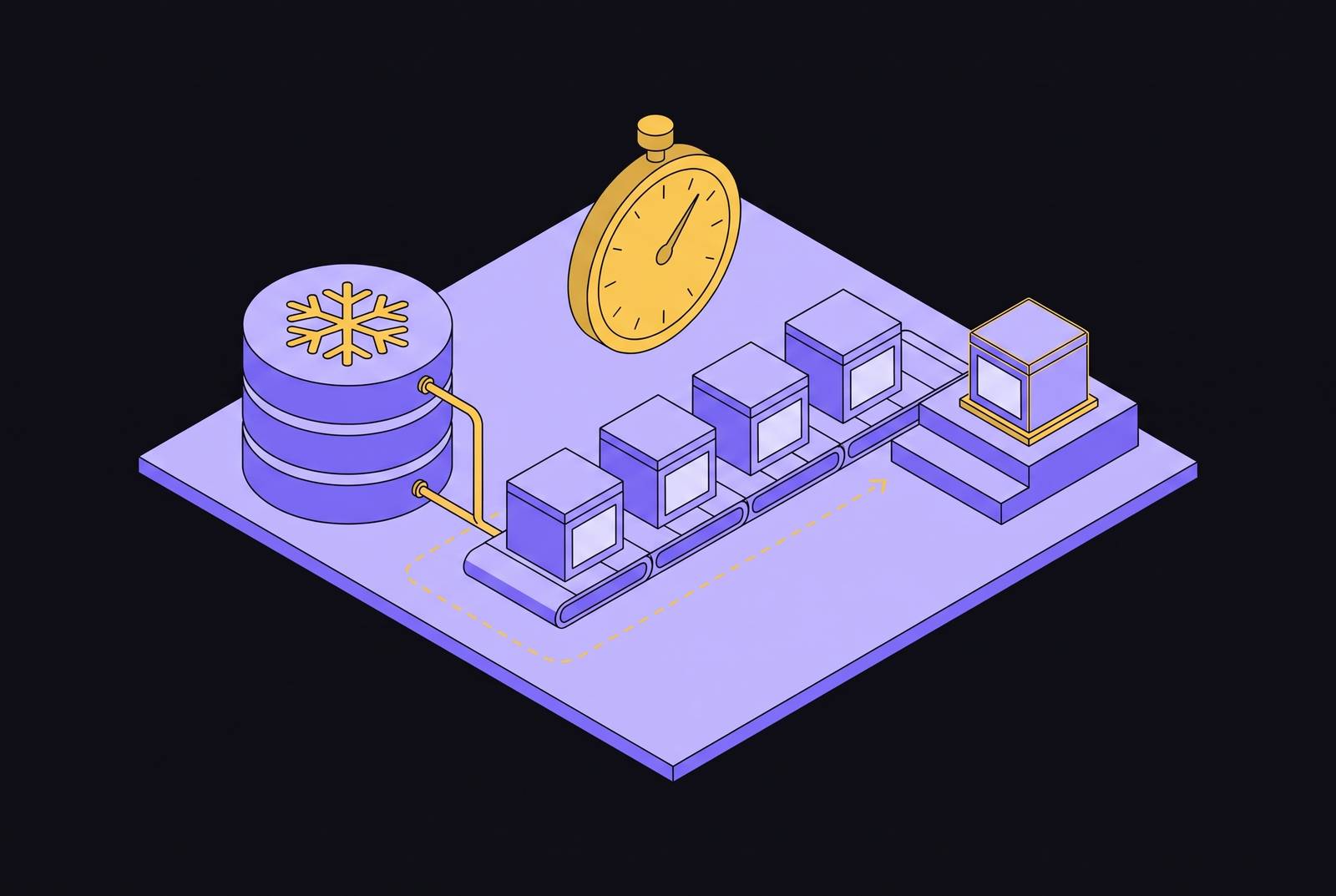
White-label embedded data export lets SaaS customers export their data inside the host product’s branded experience. The fastest route to production is a component that fits the product’s tenant isolation, governed data model, and delivery requirements without custom infrastructure. For Snowflake-backed exports, those architectural choices determine the schedule more than dashboard styling or logo removal.
For most teams, a Snowflake-backed white-label export component reaches production in a range that depends almost entirely on how many of the four required architectural layers the purchased component actually covers. The component itself can be embedded quickly, but tenant isolation, a governed semantic layer, branded delivery, and warehouse-native data access each carry their own setup and review cycles before customers can safely export data. Discovering any of those layers is unmet after purchase is what stretches timelines, because retrofitting a streaming pipeline after a batch design is already in production, or adding schema-level separation after building on shared-schema RLS, adds weeks. The decisions that compress time to production are known in advance: matching the required isolation pattern before committing, shipping metric governance alongside the component rather than after it, and setting freshness expectations before choosing ingestion approach.
Why time to production is the right frame for evaluating Snowflake-backed white-label export components
Teams often scope a branding exercise when they are actually committing to a multi-layer build. A front-end SDK can supply an interface, but pipelines, joins, and tenant keys still need to work beneath it. Snowflake provides storage and compute for the customer-facing export experience. Teams still need to enforce tenant boundaries, keep metrics consistent, and add branding to outputs.
That gap changes the useful buying question. “Which platform is best?” says little about how much engineering remains after purchase. “How long until customers can safely export their data?” forces the evaluation to include dependencies that a polished demo can conceal. Time to production therefore measures architectural fit, rather than just how quickly a team can embed a screen.
What architectural layers slow teams down when building a production Snowflake export component?
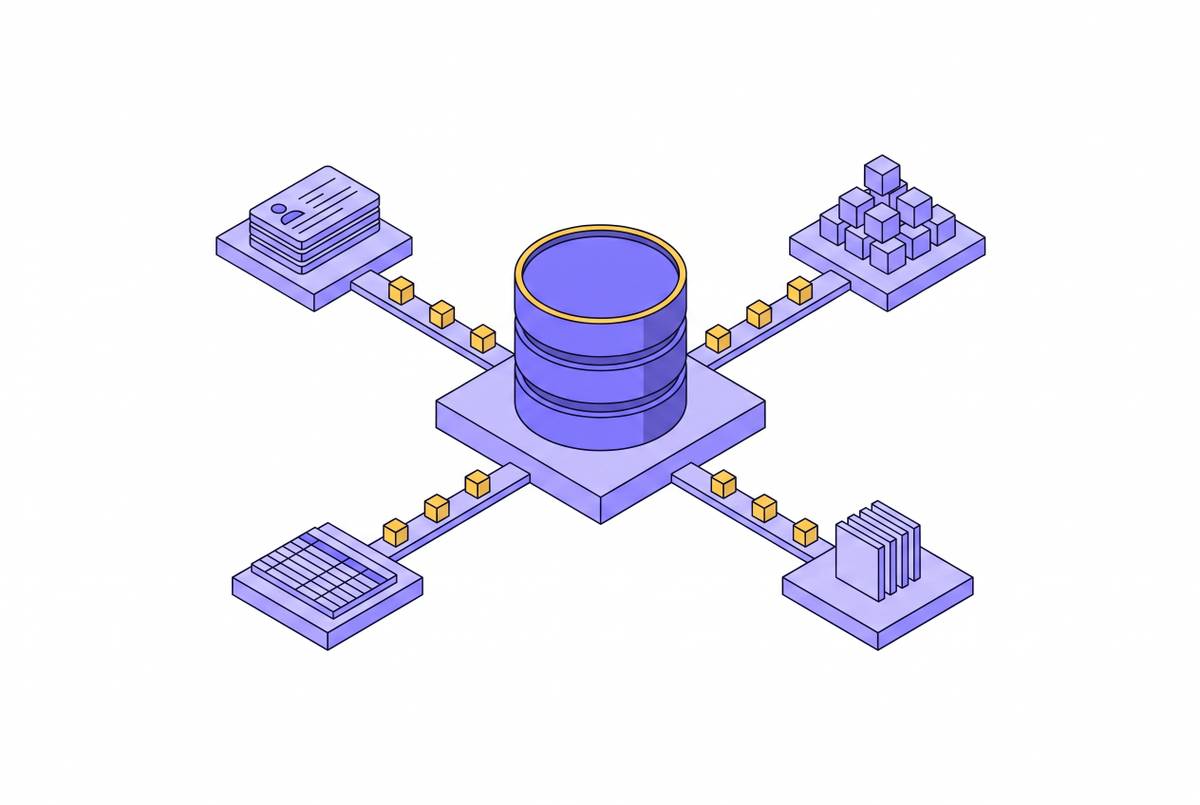
Warehouse-native data access is the first layer. It connects the export component to Snowflake, with queries running directly against the warehouse or requiring another data environment depending on the access approach. Knowi offers direct querying without staging tables or ETL pipelines. This removes a separate copying step, but how fresh the warehouse data is still depends on how it gets there.
Tenant isolation defines which customer can access which data. The available patterns include row-level security within a shared schema, separate schemas, and separate databases per tenant. Above that boundary, a governed semantic or transformation layer defines metrics and applies access rules at query time. Dashboards, chat, and scheduled reports can then use the same definitions rather than independently calculating the same business measure.
Branded delivery is the last layer that customers see. Its scope ranges from removing a vendor logo to dashboard theming, per-tenant themes for resellers, and complete coverage across customer touchpoints. That deepest level includes custom domains, email notifications, PDF exports, AI responses, and error messages. An embedded dashboard can therefore be branded while the surrounding export experience still reveals the supplier. Delivery requirements need to describe the whole surface.
Which architectural decisions compress the timeline and which blow it up
Tenant boundaries come first because every other layer depends on them. Row-level security in a shared schema offers the fastest initial route, but it requires disciplined policy authorship. If enterprise review requires demonstrable schema-level or database-level separation, then shared-schema RLS alone does not meet that requirement. Separate schemas and databases take longer to provision at scale, but their boundaries are easier to demonstrate during review. For healthcare and finance buyers requiring those stronger patterns, the setup belongs in the original schedule.
The next decision is whether metric governance ships with the component or follows it. Skipping a semantic layer shortens the initial build. However, teams can then spend weeks reconciling disagreements between dashboards, reports, and chat as those surfaces expand. Querio stores context as plain SQL, Markdown, and Python files synced to GitHub in the same repository as the dbt project. That approach keeps business logic reviewable outside a vendor interface.
Once the data layer is settled, embedding becomes a more bounded choice. Iframes are the fastest to ship but the hardest to style, while JavaScript SDKs and web components take more work at the start and can meet more of the product’s needs. API-first delivery gives the host application full control over its interface at the greatest initial engineering cost. Knowi distinguishes simple URL, secure encrypted URL, and Single Sign-On API integration, with JavaScript rendering available across methods.
If customers expect near-real-time exports, the team should set that expectation before choosing batch or streaming ingestion. Retrofitting streaming after a batch pipeline reaches production adds weeks.
How pricing model choice interacts with build scope and long-run unit economics
Embedding extends analytics from an internal team to the customer base. That distinction connects delivery architecture to the pricing model. A per-seat contract can be manageable during a pilot but become a growth tax when external viewer counts reach thousands. A technically suitable component may therefore conflict with the product’s economics after the integration is complete.
Pricing belongs in scope before that commitment. Flat-subscription and capacity-based models are easier to predict once the tenant count passes a certain point, while destination-based pricing depends on how many destinations are connected, regardless of how many rows are moved or users are served. For export-heavy workflows, that distinction avoids penalizing customers simply for moving more data. Reveal and Qrvey offer fixed annual or flat-rate pricing with unlimited end users, illustrating a different commercial structure from per-seat licensing.
These models do not eliminate the need to estimate demand. Whether the chosen contract fits SaaS margins still depends on how many tenants and viewers it must serve and how much they export at peak times. Teams should model peak exports before accepting usage-based pricing and address commercial terms as part of the technical decision.
Multi-tenant security requirements that determine whether enterprise buyers can sign
A team can hit its delivery date and still lose an enterprise deal if security review finds that tenant isolation exists only in the interface. The component looks finished, but the warehouse does not enforce the promised boundary. An elevated service account is the critical failure mode because it can bypass row-level controls. Application filters do not repair that underlying access model.
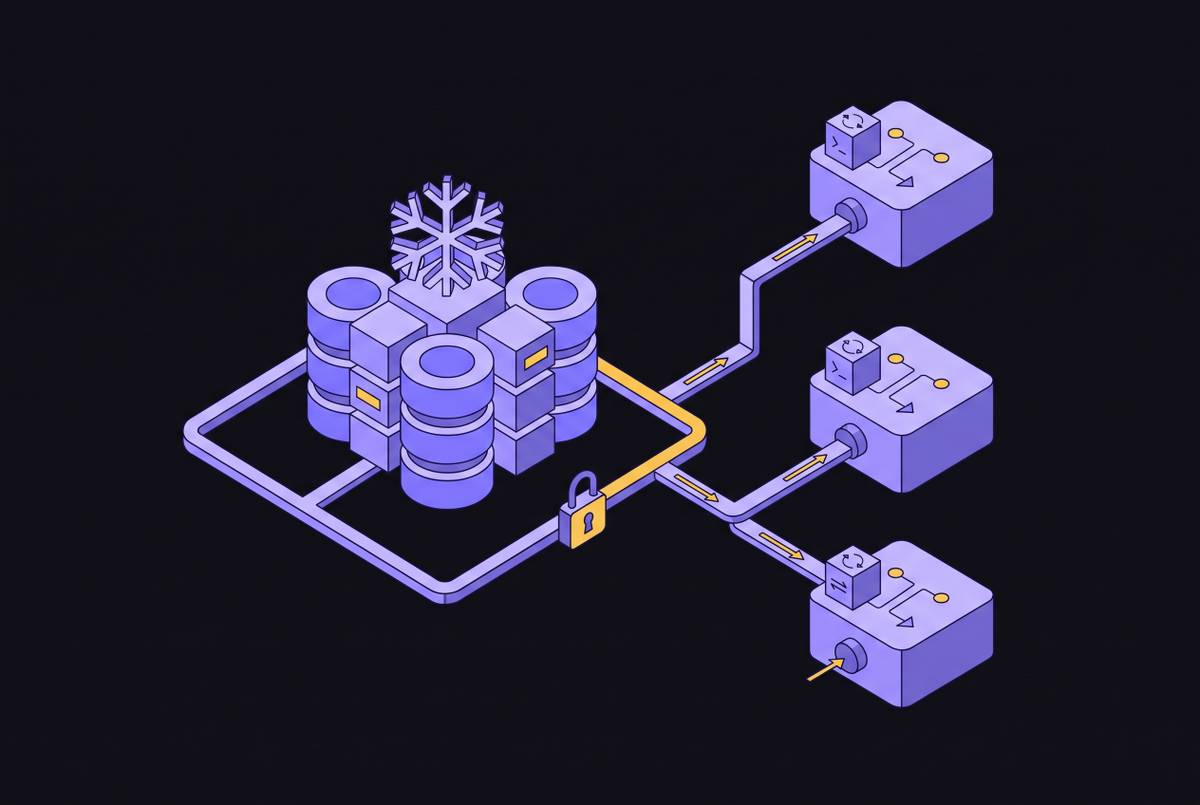
Warehouse-native enforcement closes that gap at query time. A signed token supplies the tenant ID, the query layer injects those attributes as bind parameters, and the warehouse enforces the policy. Authentication should also inherit the host application’s identity system, mapping its session token or JWT to the user’s tenant and role. Short-lived warehouse identities with least-privilege access make it less likely that product permissions and analytics permissions will drift apart.
SOC 2 Type 2 certification is a gating requirement, while private-cloud or on-premises deployment can be necessary to meet strict residency requirements. Regulated deployments also need column-level security to limit which fields users can see within rows they are allowed to access. For AI-generated answers, audit trails must show what was queried and returned.
AI makes these architectural dependencies harder to defer. An assistant generating SQL through an elevated account can bypass application-layer tenant controls, while one grounded in governed metrics can inherit permissions and produce answers consistent with reports. Querio uses MCP over OAuth so agent queries inherit the requesting user’s permissions without a shared service account. With warehouse-native isolation and a governed model already in place, AI integration becomes a configuration task.
Branding must extend to the assistant as well. Its responses cannot expose vendor names or product conventions if the experience is genuinely white-label. Agent access to data already exported into a customer-owned warehouse offers an alternative pattern on customer infrastructure. In either case, security review is a design input.
How can SaaS teams add Snowflake-backed white-label export without building from scratch?
Cube fits teams seeking warehouse-backed access, per-tenant RLS and caching, a governed semantic model, and control over delivery. Its embedded surfaces range from an iframe to a custom AI analyst. The Analytics Chat API and Core Data APIs let teams use headless delivery and build the interface in the host product. That route trades a longer initial UI build for deeper control.
Omni has governed metrics and grounded AI, along with native row, column, and field-level security. Markdown visualizations and CSS dashboard controls address branded delivery, making it relevant where governed AI and extensive customization are both requirements. Omni’s Snowflake access mechanism remains to be established during scoping of the four-layer fit.
Knowi addresses the warehouse-access decision explicitly through direct Snowflake queries without staging tables. Session inheritance and row-level security control which data tenants can access, and teams can choose integration methods based on how quickly they need to ship and how much control they need. On-premises deployment and SOC 2 Type 2 certification address enterprise constraints. Its supplied description does not establish a governed semantic layer equivalent to the models described for Cube or Omni.
GoodData combines workspace-based multi-tenancy with a governed semantic layer. React SDK, Web Components, iframe, and REST API delivery let teams choose how much of the interface they build themselves. Cloud and self-hosted deployment accommodate different infrastructure requirements, although the supplied description leaves its Snowflake access method unspecified. Querio instead emphasizes version-controlled semantics shared by dashboards, an embedded assistant, and reactive notebooks, with OAuth-based agent permissions. Its fit is clearest where governed AI access is central, while branding depth still needs evaluation.
Reveal addresses the delivery and pricing decisions directly. Its true SDK avoids iframes, and fixed pricing changes the economics of broad customer access. Qrvey combines native multi-tenancy, Kubernetes deployment, full SDK theming, custom domains, and flat-rate pricing with unlimited users and dashboards. The supplied descriptions leave some warehouse-access and semantic-layer details unclear for both platforms, so teams still need to check those details as they weigh the options.
Peliqan addresses a different source of build work. Its federated SQL engine queries across sources without moving data, while governed datasets can be published as REST endpoints. Low-code Python data apps run directly on the warehouse, positioning it as a data layer plus white-label delivery platform. That profile is relevant when cross-source preparation dominates scope, but the required tenant-isolation pattern still needs matching to platform support.
The strongest objection to the "buy over build" argument and how to weigh it honestly
Buying can relocate custom work into the purchased platform. An unusual data model can turn semantic configuration into a custom build inside a platform. Unsupported database-per-tenant isolation can require separate infrastructure, while audit formats, key management patterns, or private-link requirements can exceed a managed offering. In those cases, buying can save far less time than claimed.
Buying is not automatically the faster route. The honest comparison is between the custom work remaining after platform adoption and the work required to build all four layers directly. AI also needs branding, permissions, governed metrics, and audit trails to work together in production. A demo prepared by the vendor does not show that these parts fit together. The useful test is whether the SaaS team can ship a per-tenant theme, custom domain, and branded AI chat without filing a support ticket.
A decision framework for scoping the build before committing
The first scoping question concerns the buyer’s required isolation boundary. Teams should check whether shared-schema RLS, separate schemas, or separate databases will pass review, then rule out platforms that need unplanned infrastructure to support the required pattern. The second question concerns white-label depth. Requirements should distinguish logo removal, dashboard styling, per-tenant themes, and complete coverage across domains, email, PDF exports, and AI chat. Each level adds configuration and testing work.
Third, teams need to establish where the data lives and how fresh it must be. Cross-source federation changes the shortlist, while near-real-time expectations can add upstream ingestion work even when the component queries Snowflake directly. Teams should model viewer expansion and peak exports against per-seat, usage-based, capacity, flat-subscription, or destination-based terms before committing.
Fifth, teams need to establish when AI agents will need access. If AI is on the roadmap, warehouse-native enforcement and governed metrics belong in the initial design, with tenant context verified at the query layer before launch. Production-condition testing should also cover per-tenant themes, custom domains, and branded chat through CI/CD without vendor support. Load testing should check whether others are disrupted when the largest tenant’s demand grows.
These answers turn the estimate into defined build scope. Unsupported isolation adds infrastructure work, deeper branding adds delivery work, and unmet freshness requirements add pipeline work. The decisions that compress time to production are known and predictable. Timelines expand when teams discover those dependencies after committing, which makes this a scoping discipline before it is a platform-selection exercise.