Snowflake External Tables vs Internal Stages for Lakehouse Architectures
Snowflake-managed Iceberg tables split the difference between vendor lock-in and query performance.
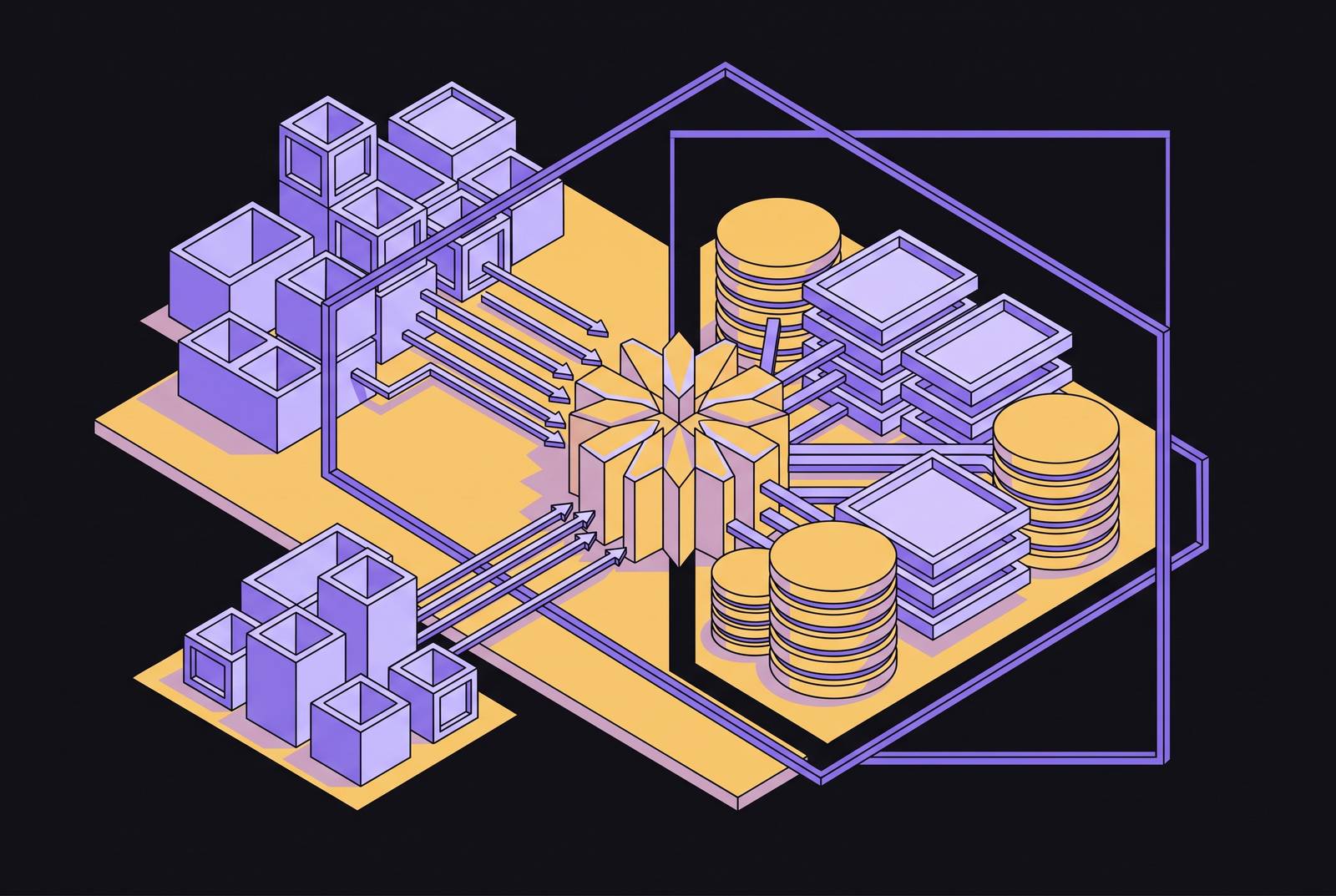
Picking between Snowflake internal stages, legacy external tables, and Iceberg tables comes down to who owns the data, who pays for every query against it, and who else gets to read it without going through Snowflake first. It is not a matter of stacking up feature lists side by side. Three distinct paths exist here, not two, and each carries its own answer to who owns the data. Internal stages put Snowflake fully in charge of storage and give the team its complete query engine in return, at the cost of tighter dependency on the platform. External tables flip that: Snowflake holds only the metadata, the actual files sit in the team's own S3, GCS, or ADLS bucket, and Snowflake functions as a read-only query layer with no write access at all. Iceberg tables, now ready for production use inside Snowflake, add a third path built on open file formats that Snowflake, Databricks, Spark, and Trino can all read and write without anyone duplicating the data. Whichever path a team picks here carries forward into how queries perform, what shows up on the bill, how far governance actually reaches, and how an AI agent behaves when it goes looking for data, and each of those gets its own treatment below.
What each option does under the hood
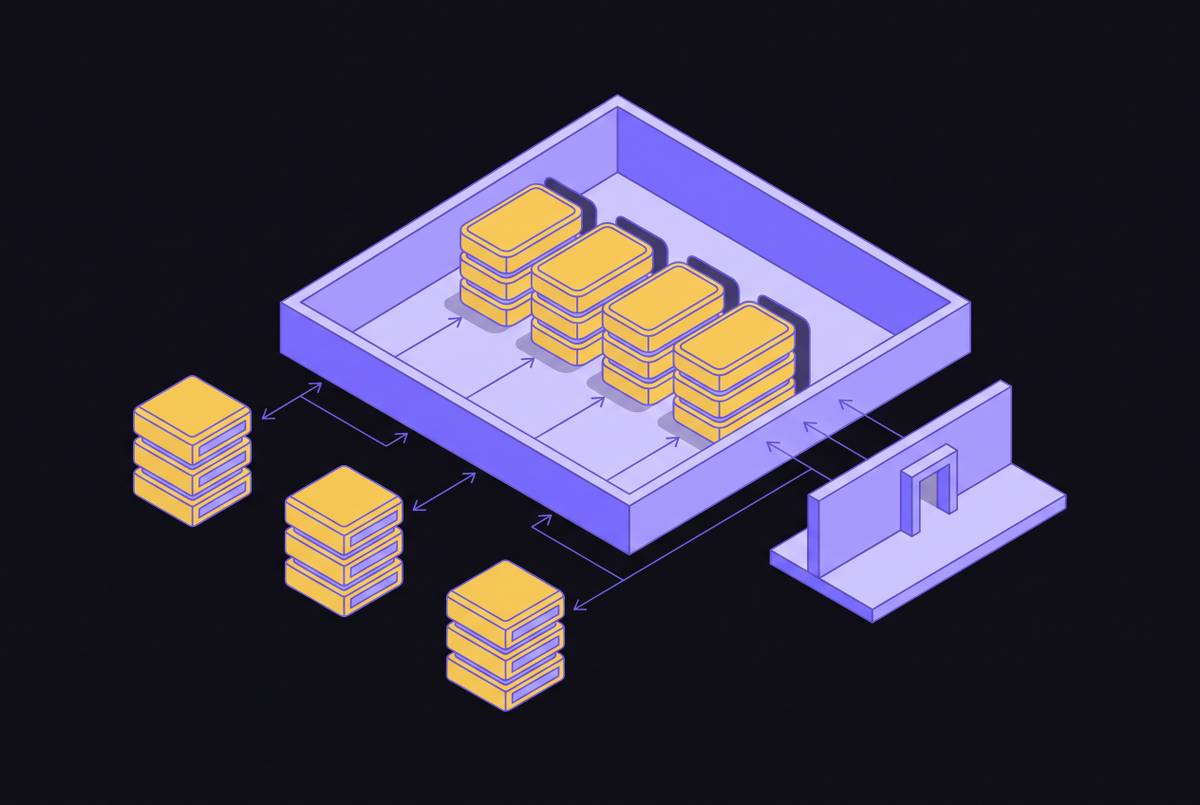
The performance, cost, and governance gaps between these three options trace back to a handful of structural differences: with internal stages, data gets loaded straight into Snowflake's own storage and reshaped into its micro-partitioned format, and from that point on, every query against it runs on Snowflake compute and shows up on the Snowflake bill. External tables work differently from the ground up: Snowflake keeps only metadata about the files, the files themselves stay put in the external stage, and while no INSERT, UPDATE, or DELETE is possible against them, they can still be queried, joined, and used as the foundation for views and materialized views.
Externally managed Iceberg tables keep both the data files (usually Parquet) and the Iceberg metadata in the team's own cloud storage, with Snowflake reading directly from that location, a setup suited to organizations whose lakes already run through engines like Spark or Trino. Snowflake-managed Iceberg tables work differently: the data files still live in external storage, but Snowflake takes over the Iceberg metadata through Snowflake Open Catalog, built on Apache Polaris, and that gets a team full read and write support, automated file compaction, and snapshot retention.
The setup overhead tells its own story about where the operational weight sits. An internal stage needs none of that. A name and an optional encryption setting will do. That gap in setup complexity is a preview of a larger pattern: external architectures push configuration and maintenance work onto the team that internal architectures simply absorb.
Metadata resolution at query time and the performance gap
Querying an external table runs slower than querying a native Snowflake table, a fact Snowflake's own documentation states without attaching a specific multiplier. The reason traces to a single mechanical difference: metadata gets resolved at the moment the query runs, rather than being computed ahead of time and cached inside Snowflake's storage layer the way it is for native tables. Every query against an external table pays that resolution cost fresh, because there's no pre-built index sitting ready inside Snowflake to shortcut the lookup.
Teams that lean on external tables heavily typically reach for materialized views as a workaround, and that fix genuinely helps for queries that repeat or run over large volumes. But it comes with strings attached: a materialized view needs a refresh cycle, and that cycle has to be managed by someone, which opens a staleness window between when the underlying files change and when the view catches up. Internal stages sidestep the entire problem. Because native tables sit in Snowflake's micro-partition format with automated clustering and caching already built in, there's no runtime metadata resolution step standing between the query and the answer.
Snowflake-managed Iceberg tables shift this equation again. Because Snowflake owns the metadata layer and handles file compaction on the team's behalf, query performance lands close to what native Snowflake tables deliver, closing much of the gap that legacy external tables leave open. That said, Iceberg isn't free of friction. Heavy row-level updates still run slower than they would on native tables, metadata synchronization can lag behind the underlying files, and for externally managed Iceberg tables specifically, someone on the team has to handle file compaction by hand rather than letting Snowflake do it automatically. A workable rule of thumb follows: reach for external tables when access to lake data is occasional, lean on native tables for anything queried constantly, and pick Iceberg when open storage and solid performance both matter at once.
Data ownership, storage cost, and vendor lock-in exposure
Routing data through Snowflake's internal stages hands Snowflake ownership of the storage layer outright, and that has a direct consequence: every query against that data, including every embedded dashboard render and every AI feature call, runs on Snowflake compute and gets billed as such. External and Iceberg architectures shift that cost and that control back to the team or to the customer.
Snowflake's proprietary micro-partitioned format delivers real reliability and speed in exchange, but it tightens the coupling considerably; contrast that with Databricks, which starts from open lake storage in Delta Lake format, where portability across engines comes as the default rather than something bolted on later.
This calculus compounds for SaaS products layering embedded analytics or AI features on top of Snowflake. Teams that push every customer's data through internal stages absorb a per-query compute charge for every single customer-facing feature call, a cost structure that scales directly with product usage rather than with anything the team controls. External and Iceberg architectures change that relationship: each customer's data can sit in that customer's own storage account and get queried from there, which makes cost attribution far cleaner and cuts down on egress exposure. For a product team trying to price a feature predictably, that difference between compute costs baked into the platform bill and compute costs attributable to a specific tenant is not a minor accounting detail. It shapes whether the product can scale its margins alongside its user base or whether every new customer adds an unpredictable new line item to the infrastructure bill.
Snowflake-managed Iceberg tables carve out a middle path worth taking seriously. Data files stay in storage the customer controls, while Snowflake handles metadata management and query optimization on top, so the team keeps its storage portability without giving up Snowflake as the primary query and governance layer. That arrangement also unlocks something legacy external tables never offered: real multi-engine interoperability, where data written by a Snowflake-managed Iceberg table can be read directly by Spark, Trino, or Flink, with no duplication and no separate copy pipeline needed to keep different teams working from the same source of truth. For any team building a product where customers expect to own their own data, and expect to plug that data into whichever engine they already run, that portability matters: it can decide whether customers stay or leave. That portability can decide whether customers stay on a platform they can leave or end up locked into one that quietly becomes permanent infrastructure.
Where the governance perimeter sits for each architecture
Deciding who owns the storage naturally raises the next question: who governs access to it, and where does that boundary actually sit?
Internal stages and native tables keep everything inside Snowflake's own governance stack: role-based access control, dynamic data masking, row access policies, object tagging, and full audit history all apply directly to the data. The team controls nothing beneath Snowflake's abstraction layer, which cuts both ways. There's less to configure and fewer places for a mistake to hide, but there's also no exit path that doesn't run through Snowflake.
External table architectures work differently, because they introduce a second governance perimeter that Snowflake never touches: the cloud bucket itself. Bucket policies, IAM roles, storage integrations, and the timing of catalog refreshes all have to be designed and maintained explicitly by the team. None of it gets inherited automatically from Snowflake's controls. External architectures simply demand their own governance design at their own perimeter, with the internal path making that perimeter smaller and handing its management to Snowflake. Each architecture places the governance perimeter at a different layer, and the seams between Snowflake's controls and the team's own bucket or catalog policies are where compliance gaps most commonly open.
For externally managed Iceberg tables where Snowflake isn't the primary catalog, the platform reaches the data through account-level objects, an EXTERNAL VOLUME and a CATALOG INTEGRATION, and someone on the team has to manage metadata refresh cycles carefully, or stale reads creep in. That risk compounds in any workload running close to real time.
Snowflake's SOC 2 Type II certification covers the design and operating effectiveness of its own security, availability, and confidentiality controls. The most publicized security incidents connected to Snowflake did not stem from flaws in Snowflake's platform. They traced to weak authentication, missing multi-factor authentication, over-privileged accounts, and a lack of monitoring, all on the customer's side of the shared responsibility line. External architectures don't weaken anything Snowflake controls directly, but they add a second shared-responsibility surface, the bucket itself, that the team has to govern on its own. Leaving that surface unmanaged opens a gap that neither Snowflake's SOC 2 attestation nor the team's own compliance program will catch.
One more distinction belongs here, on backup and recovery. Snowflake-managed Iceberg tables support time travel, but Fail-safe protection depends entirely on where the storage lives: tables using a customer-managed external volume get no Fail-safe coverage from Snowflake, since the data sits in storage the customer controls, while tables using Snowflake-managed storage do get Fail-safe protection for permanent tables. Teams running the customer-managed path need their own backup and recovery plan for that layer, because Snowflake simply isn't providing one.
Agentic AI workloads and the stakes on this decision
Everything above mattered plenty for traditional BI, where queries are largely predictable, weekly reports, scheduled dashboards, familiar joins run on a known schedule. Autonomous agents break that predictability. They construct queries the architecture was never designed to anticipate, they need low-latency access to data with full RBAC enforcement intact, and they generate audit requirements that external tables simply cannot satisfy on a reliable basis.
Snowflake's own agentic platform, Cortex Agents, reached general availability on November 4, 2025, built to reason over a request, plan out the necessary steps, call tools, run code, and return an answer. By April 2026, Snowflake had added Model Context Protocol connectors, letting Cortex Agents reach outside systems including Atlassian's Jira and Confluence, GitHub, Salesforce, Google Workspace, and Slack. Data access for these agents runs through Snowflake privileges and whatever execution context each configured tool carries, combining structured and unstructured data inside one governed workflow: SQL gets generated over structured data through Cortex Analyst semantic views, and unstructured data gets pulled through Cortex Search.
For workloads like this, internal stages and native tables are the clear choice. Agents need low-latency access to structured data, RBAC enforcement down to the row and column level, and complete audit trails, none of which external tables deliver with any reliability. The metadata-refresh risk that was merely inconvenient for BI dashboards turns genuinely dangerous for agents. Externally managed Iceberg tables running on catalog refresh cycles can serve up stale data during continuous or near-real-time inference loops, and an agent acting on stale data doesn't fail loudly. It produces a confidently wrong answer that looks exactly like a right one.
There's also a security dimension that BI workloads never had to reckon with. Autonomous agents combine data access, system execution, and data movement into a single profile, and that combination expands the enterprise attack surface considerably. Snowflake's answer to that expansion was the Cortex AI Gateway, first announced on July 28, 2026 and showcased at Black Hat that year, a control layer that lets enterprises specify exactly which tools, models, data, and applications each agent can reach, while tracking activity in real time.
For SaaS products embedding AI features on top of customer data, the multi-tenant implication is direct: isolation between tenants has to be enforced at the semantic layer, meaning row, column, and field-level security defined in the model itself and inherited automatically by every query, including the ones an AI agent generates on its own. Filtering built into the application layer breaks down under this kind of load, because an agent can construct a query the middleware was never built to expect. The broader principle for any team building data-driven or AI-powered features follows from that: a data integration layer that enforces isolation and governance before data ever reaches the agent takes that entire attack surface out of the application layer's hands. Teams that treat connectivity as a product feature, built once and governed centrally, inherit that governance model automatically. Teams that stitch together ad-hoc pipelines have to rebuild it, tenant by tenant, and hope nothing slips through the seams.
Sources
- 5 step guide to set up Snowflake external tables (2026)
- Databricks vs. Snowflake in 2026: The Architecture-Level Guide to Lakehouse Decisions -
- Snowflake Iceberg Tables: The Dawn of a Truly Open Lakehouse | by VIKAS MITTAL | Medium
- Internal vs. External Stages in Snowflake Explained | by Rahul Sounder | Medium
- CREATE STAGE | Snowflake Documentation
- Introduction to external tables | Snowflake Documentation